
Surgeon with niche expertise a welcome addition to the TLA team
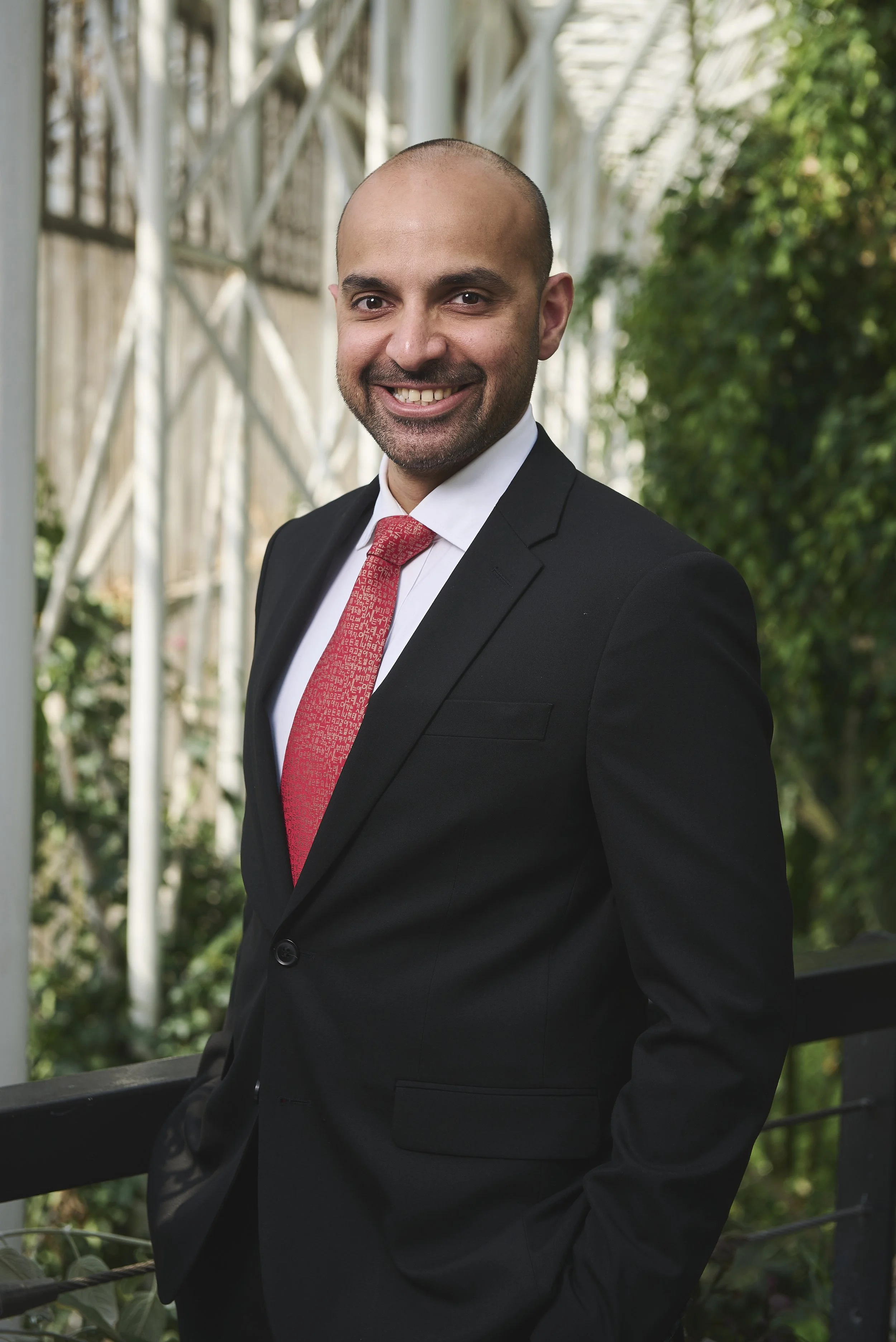
Finding the right expert for a particular case can be challenging but at the same time the process is vital to ensure the most accurate evidence is presented in court.
TLA is continuously looking to expand and further improve its rota of specialists and one of its latest recruits, Mr Vish Shetty, is a highly significant addition to the team.
Mr Shetty is a Consultant Orthopaedic Trauma Surgeon at St George’s Hospital, the largest hospital in London and, as part of the London Major Trauma System, one of the busiest major trauma centres in Europe.
Critically, his practice covers complex orthopaedic fractures across the whole body, specialising in pelvic and acetabular fractures.
He says: “I have a very niche role in Major Orthopaedic trauma - I am one of three full time orthopaedic trauma surgeons in London specialising in this area. Usually, patients with multiple fractures often get treated by different surgeons but my role allows me to treat all fractures in one sitting. This effectively streamlines the patients care within the hospital and speeds up their overall recovery.
“Another aspect of my job is leading the Major Trauma Multidisciplinary Clinic, one of a few dedicated clinics of its kind nationally. This is a specialised service focused on polytraumatised patients’ clinical care, physical rehabilitation and psychological recovery.
“As part of this role, I liaise with other specialties such as neurosurgery, cardiothoracics, plastic surgery, ophthalmology, ENT, intensive care etc. These patients require a special form of care as they move between multiple departments and that is often a problem because it's very hard to get people within the hospital to communicate with each other for patients who have a combination of complex injuries.
“My job is to ensure all their clinical, physiotherapy and psychological needs are looked after to ensure they make a full return, not just to health, but to life.”
Mr Shetty is keen to emphasise that patients’ treatment is not just confined to hospital.
He adds: “In medicine, we can be very hospital focused - we treat patients and discharge them home, assuming they go back to normal. But patients with major traumatic injuries sometimes never really go back to normal so part of the major trauma outpatient clinic services is to ensure they go back to some version of normal.
“From a psychological point of view, we help them with documentation required to communicate with their employers, overseeing adaptations for return to work or help if they need to find a new job. It can be about simple things like applying for a disabled badge for parking and helping them understand how long it will take to recover.
“Having a psychologist and a physiotherapist is useful because we approach the different parts of their recovery together and also coordinate their care with other specialties. I try to make sure none of their issues are forgotten about.”
Mr Shetty was referred to TLA by fellow surgeon and full member, Professor Alex Trompeter, due to the rarity of his expertise.
“Alex is a colleague at St George's and we work closely together to manage patients with complex Orthopaedic injuries” explains Mr Shetty.
“He suggested that, because my job is so specialised, I am suited to medicolegal work because a lot of cases are about polytrauma patients with multiple injuries.”
As a result, Mr Shetty has recently completed his medicolegal courses including the Civil Procedure Rules (CPR) Part 35 which governs the use of expert evidence in English civil courts and is about to start working as a full TLA expert.
He adds: “Alex said he’s had a very good experience with TLA and says that working with TLA as a full member is the best way to start a medicolegal practice because they look after administrative side of things, leaving you to focus on the work without being distracted.
“Medicolegal work interests me because sometimes I see patients who have had surgery done elsewhere which needs to be amended. There are so many decisions made around major trauma cases, and they can go awry and complications can arise.
“It is the nature of the profession that sometimes things will go wrong and that’s part of my role: to ascertain what is an avoidable complication and what is simply a sequela of a major injury. I enjoy the complexity of the work and that's what drew me to the medicolegal area.”
Mr Shetty comes from a medical family with his father being a hepatobiliary cancer surgeon and his mother an obstetric anaesthetist.
“They used to always say ‘don’t pick a speciality, pick a lifestyle.’ It’s important to like the people and the patients you work with as they are the ones you will interact with most. And at an early stage of my career, I ended up working in Major Trauma Centres. I found myself drawn towards the organised chaos of major trauma. Conversely, I could never find an elective procedure I liked enough to do for the rest of my life!
“Orthopaedic Trauma was hard to specialise in as a trainee in the UK, as the system doesn't have a pathway for training in complex injuries across the whole body. It tries to align you towards an anatomical part of the body, (shoulder surgeon, knee surgeon, hip surgeon etc) and those are the jobs that come up. I didn't want to limit myself anatomically to one part of the body and wanted to continue developing a broad skill set so I could deal with fractures across the body. Thankfully, I found a Consultant job within the field so I'm lucky.”
Mr Shetty came to London to complete his basic surgical training after graduating from Topiwala National Medical College in Mumbai. I completed my specialist training in Trauma and Orthopaedics on the Royal London Rotation, being the only trainee to ever rotate through four major trauma centres,” he says. This was followed by a SICOT Travelling Fellowship to Ganga Hospital, India and a year long AO/OTA fellowship in Orthopaedic Trauma at Vancouver General Hospital.
He also earned an MCh in Orthopaedics - a high-level postgraduate surgical qualification - from Canterbury Christ Church University and an MSc in Orthopaedic Trauma Sciences from Queen Mary University, London.
Additionally, he is interested in training and education and has a Postgraduate Certificate in Medical Education from the University of Cambridge and membership of The Academy of Medical Educators and The Faculty of Surgical Trainers (Edinburgh). He also sat on the SICOT Young Surgeons Committee from 2022-2024.
Mr. Shetty also engages in clinical research. Most recently he completed a project around pelvic ring fractures in the elderly, presented it at five international conferences in 2025 and submitted it for publication. Another current project is a pilot study for a randomised control trial involving rehabilitation post trauma.
He explains: “It's about using blood flow restriction therapy for lower limb injuries. I have been awarded grants worth $20,000 and patients are now being recruited at Vancouver General Hospital.”
Outside of work, Mr Shetty spends time in the pursuit of happiness with his wife, son and their dog. He adds: “I am trying to get back to playing racquet sports and am also learning how to sail. But mainly, I feel lucky because I love my job, so work doesn’t seem too tiring!”
Please email Alice Jones, Senior Case Manager and Head of the Trauma and Orthopaedics Division at TLA for Mr Shetty’s CV and further details alice@tla-medicolegal.com