
Striving to be better
Every surgeon will carry out their work to the best of their ability but most would admit there is always room for improvement. This comes from continual research into new techniques and practice and a thirst for knowledge that will provide them with better tools to do their job.
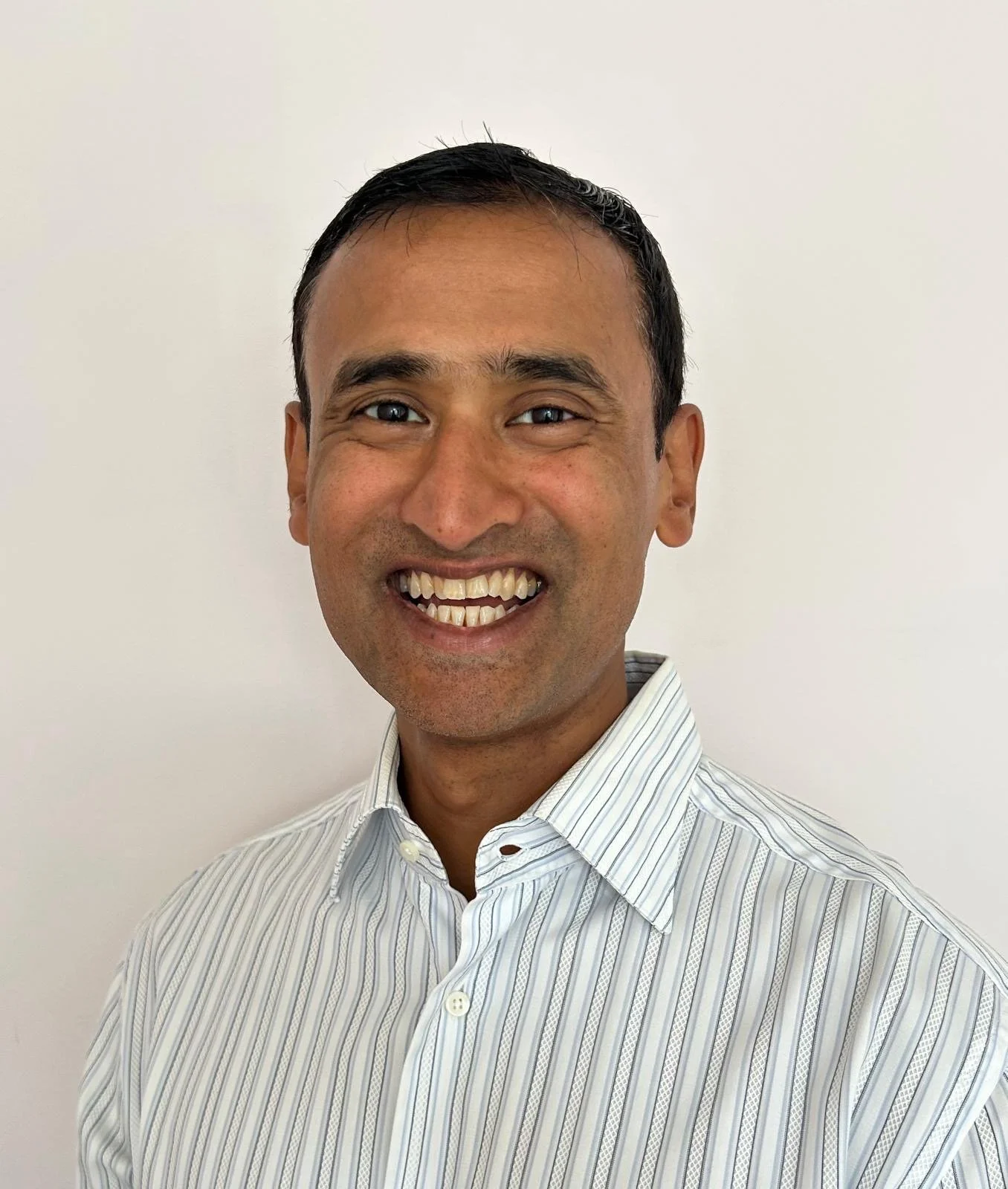
For Namal Perera, Consultant Orthopaedic and Trauma Surgeon in Foot and Ankle and Major Trauma at St George’s Hospital, London, this discipline is a driving force not only for his career but every aspect of his life.
“My byline in life is: “be better” you can improve nearly everything you do. It's about re-evaluating,” he says.
Mr Perera’s elective practice covers a broad range including arthroscopic ankle procedures, arthrodesis and reconstructions of forefoot to hindfoot, including diabetic Charcot disease. He provides total ankle replacements with a consultant colleague at the South West London Elective Orthopaedic Centre
“I also have a niche interest in spasticity, those who have had brain injuries or strokes, and some adult cerebral palsy. I do deformity correction for those patients, who are probably my most satisfied group,” he adds.
With proficiency in the management of complex trauma and continuous honing of complex lower limb trauma care, he has specific skills in the use of circular frames for treating lower limb trauma, infection of the tibia, foot and ankle and deformity correction.
“I also cover diabetic foot disease which is complex and can be fraught with complications. I'm part of the diabetic multidisciplinary team at St. George’s which is a busy unit.”
Mr Perera chose his specialist field after developing an interest in the foot and ankle early in his career.
“Surgeons talk about anatomy passionately and for me, it is the local anatomy driving the function of the position of the foot. There are many joints and as a structure it is quite complex. There's a great quote from Leonardo da Vinci that states the human foot is a masterpiece of engineering and a work of art.”
A member of the British Orthopaedic Foot and Ankle Society and World Orthopaedic Concern, Mr Perera has a keen interest in patient education and developing processes. He was the Principal Investigator at St George’s Hospital for the National Institute for Health and Care Research ACTIVE trial, comparing internal fixation to circular frames for the treatment of pilon ankle fractures. He also helped establish the Achilles tendon injury pathway at St George’s:
“We looked at data and set up a pragmatic protocol process. We can't guarantee that it's 100% perfect for everyon but we believe it covers the majority of people to a good degree,” he says.
Last year he became the Clinical Governance Lead at St George's for his department covering quality control.
“I'm very keen on safety and quality, it should be the top priority for all clinicians. I get involved in some complaints and medicolegal work with that,” he says.
“I've looked at systems such as New Zealand where there is a compensation fund if something goes wrong and that removes the often convoluted stressful process. In the absence of that, this is the route that exists for patients looking for answers and it's our job to optimise that.
“I think the time I've spent abroad looking into policy has helped me rationalise the way our system works and what can and can't be delivered.”
Mr Perera is launching his medicolegal practice with personal injury cases but is also interested in clinical negligence.
“Life is not black and white, I remember a discussion with a spine surgeon, who does medicolegal. We talked about probability and possibility, it's as though if you have enough possibilities, they can add up to a probability so I'm curious to see whether that is actually the case in clinical negligence work.
“People often get cause and effect mixed up and usually you cannot definitively find a root cause. It's your best guess which is like medicine. I'm very keen on clarifying that.”
Mr Perera signed up to TLA as a full member after recommendation by current colleague, Alex Trompeter, and former colleague, Stuart Matthews.
“I’ve had a couple of chats with Stuart, discussing tough, complex cases and it was good to hear his take. When Alex recommended working with TLA, I thought it was well-structured with people I respect and trust at the top of their game.”
Outside of work, Mr Perera has two young boys, who take up most of his spare time, although he remains a keen sportsman.
“I’ve played a few sports. I used to play a lot of hockey, then later, some football. I've seen and had a few injuries which helps with perspective. I can categorise them in terms of severity and how it might affect a particular individual,” he explains.
Please email Alice Jones, Senior Case Manager and Head of the Trauma and Orthopaedics Division at TLA for Mr Perera’s CV and further details: alice@tla-medicolegal.com