
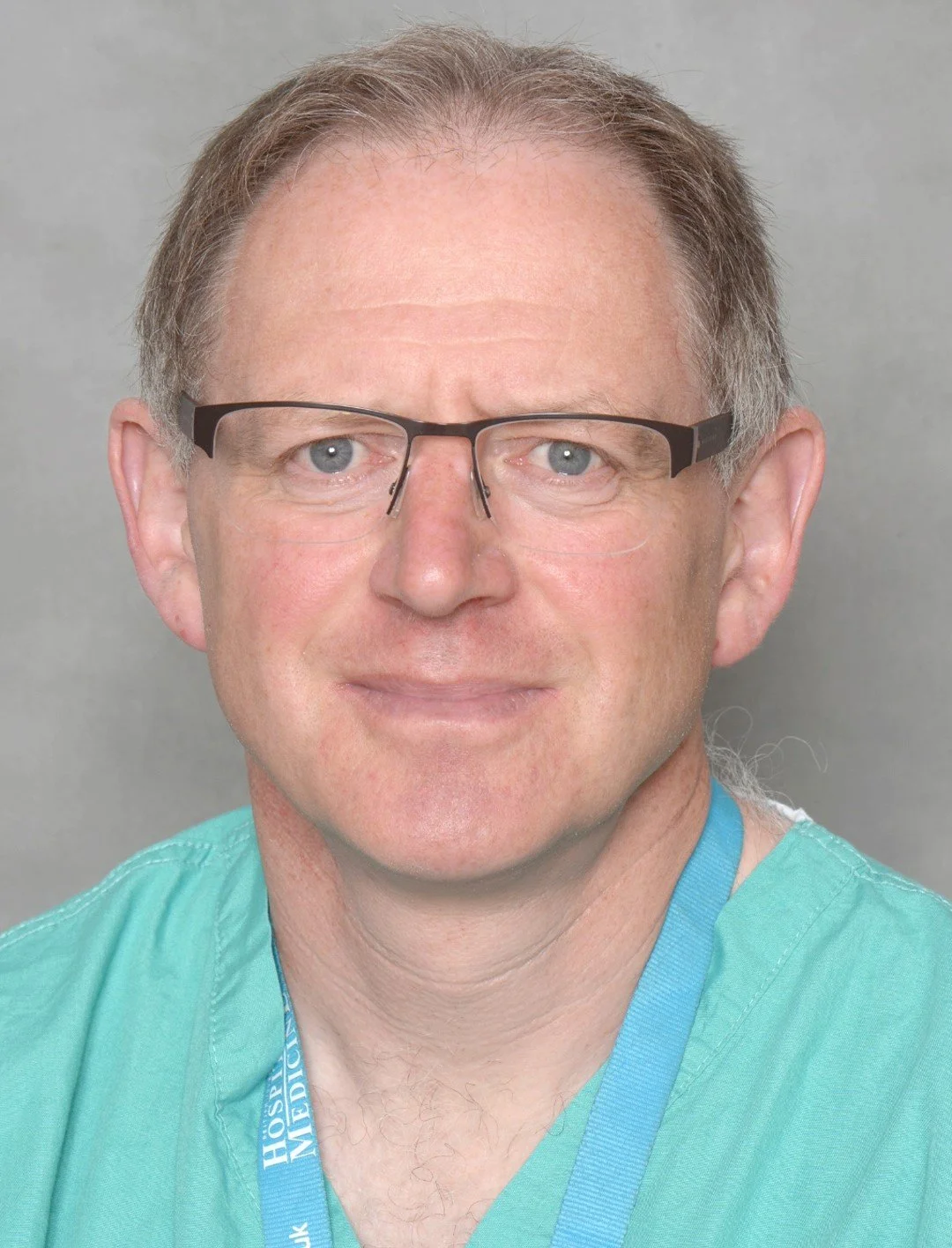
Most medical professionals enter the field with no thoughts of becoming future medicolegal experts. They usually stumble across the discipline either by being directly approached for their specialist input on a particular case or by following the example of a colleague.
Dr David Levy is no exception. He has been involved in medicolegal work since 2010 and describes taking it up as “a lucky break.”
“The then medical director was too busy with all the reports that were coming in so asked me if I wanted to write one,” he explains.
“I found it challenging - with every report, there's an element of continuing professional development. It makes you research what is best practice, whether there's been a breach of duty and if causation stands up.
“I then followed the example of one of my senior colleagues by doing a master’s degree in medical law at Nottingham Trent University.
“My dissertation was on causation in negligence so that gave me the sort of background and the depth of understanding of what lawyers are engaged in. I did it over three years because it was part-time with clinical work.”
A Consultant Anaesthetist at Nottingham University Hospitals NHS Trust, Dr Levy recently joined the panel of TLA experts.
After graduating in medicine from the University of Edinburgh in 1986, he trained in anaesthesia in Aberdeen, Sheffield and Nottingham and has a broad clinical anaesthetic practice with principal subspeciality clinical interests in obstetric anaesthesia, neuroanaesthesia and anaesthesia for electroconvulsive therapy.
“In 1995, I was appointed in obstetric anaesthesia and neurosurgical anaesthesia which are disparate specialities. However, they interact in the rare but serious cases of pregnant women who suffer intracranial haemorrhage or stroke during delivery. It's an interface between serious neurosurgical conditions and pregnancy.
“I went into this area just because I was in the right place at the right time. There were expansions in those services at the point I was trained and looking for a consultant job.
“The obstetric interest was piqued by working for a guru in the speciality, Dr Michael Tunstall in Aberdeen, in the late 1980s. Also, I'd always found neuroanaesthesia particularly interesting.”
Dr Levy also spends a lot of time teaching postgraduate trainees, medical students and midwives.
“I do enjoy teaching the next generation of what are now called residents. It includes in-theatre teaching for those training in anaesthesia.
“The midwives are a very distinct healthcare provider because they have always had pride in their autonomy, managing normal birth. But of course, when things do not go to plan and a woman is critically ill, they are seeking input from anaesthesia and intensive care.
“I teach them about the role of anaesthetists in treating critically ill women on the labour ward, furnishing them with an understanding of how epidurals and spinal anaesthetics work and how specialists with their own different perspectives can work together when a woman has a major postpartum haemorrhage.
“Also, I teach the operating department practitioners who now undertake a degree course. Forty years ago, many were ex-army technicians who just handed anaesthetists the kit. Now, they're undergraduates, in this case at the University of Leicester.
“They have to understand how the anaesthesia process works and have the ability to anticipate what can go wrong and how they can best work in a multidisciplinary team when sorting out a crisis much more than their predecessors.”
In 2020, David joined the complement of Medical Examiners, scrutinising deaths at Nottingham University Hospitals.
He is also a patient safety incident investigation advisor, vice-chair of the Ethics of Clinical Practice committee, a member of the Consent committee and an HSIB- trained subject matter advisor for maternity investigations.
As for official bodies, he is a member of the Association of Anaesthetists; the Obstetric Anaesthetists’ Association; the Neuro Anaesthesia & Critical Care Society; the Difficult Airway Society and the European Society of Regional Anaesthesia & Pain Therapy.
Widely published, he also delivers talks on medicolegal topics, for example at the Association of Anaesthetists in 2025 and the Hong Kong College of Anaesthesiologists/Society of Anaesthetists of Hong Kong in 2023.
His medicolegal work keeps him very busy, managing about 60 expert reports a year split 60/40 between defendant and claimant but he enjoys the work. He also undertakes expert reports for coroners around England and Wales.
“You are teasing apart complex cases and helping the instructing solicitor and counsel understand whether the standard of care was that of a responsible body or not,” he says.
“It does require the ability to cut through a lot of the “noise” of a case to get to the signal and actually work out the key issues and guide the instructing solicitors.
“On the defendant's side, it’s about whether this is something the NHS should spend its money on defending or whether it's something involving a breach of duty where this is a deserving claimant who should be compensated and there shouldn't be any more NHS funds spent on the “three Ds” of deny, delay and defend.
“I enjoy defendant work because there is already a case that has been put together and either I'm in a position to say with my knowledge and analysis that claimant is reasonable in what they say or that it is really flawed because of X, Y and Z and this is something that should be defended.”
Dr Levy does not rely on AI for any of aspect of his work, relying on his own expertise to produce a report.
“I want to read the records myself and make my own assimilation of everything. There are anaesthetic charts which are of variable quality and some of these are digital outputs while others are handwritten so a lot of it is quite nuanced.
“Then there are consent discussions and I just don't like the thought of feeding those into some sort of artificial intelligence. I like to get right down to the raw information and data and then make my own decisions from that.”
Please email senior case manager Kelly Booker on kelly@tla-medicolegal.com for Dr Levy’s CV and further information.