
An extraordinary dedication to patient care
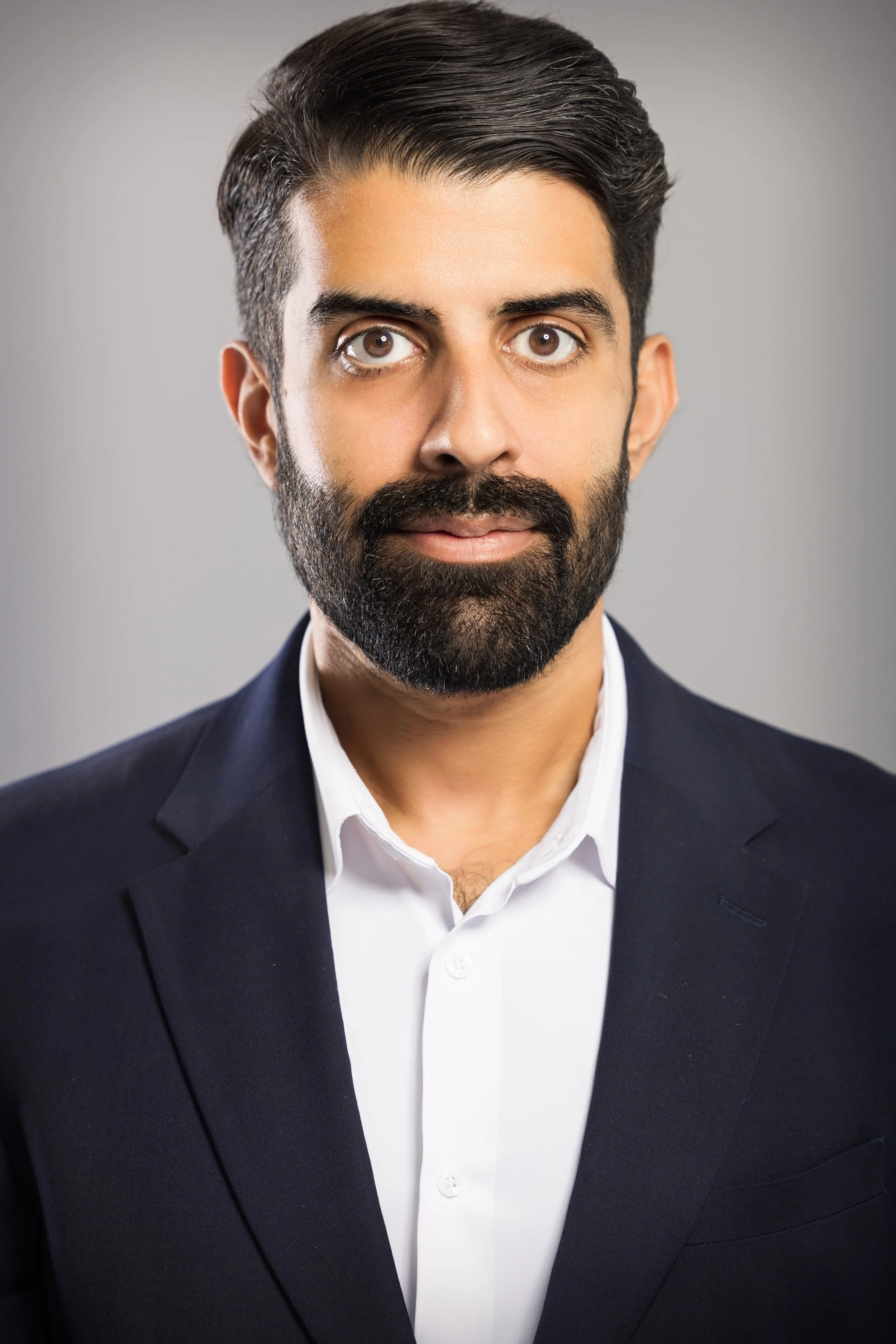
Working as a surgeon not only requires the highest levels of skill and attention to detail, dedication to the treatment of particular patients can extend over many years.
Nisarg Mehta is a good example. A consultant paediatric orthopaedic surgeon with a special interest in limb reconstruction surgery, he often oversees the management of a patient from being a child to adulthood.
He explains: “A child born with congenital femoral deficiency may have a significant leg length difference that may become pronounced as they grow” he explains.
“We work as a team, get to know the family and child and use prediction tools to calculate what the difference is going to be once the child has stopped growing. In some cases it can be 25-30 centimetres by the time they are adults.
“We then consider how best to manage it, whether it's with a series of reconstructive procedures or in some children, an amputation. These are complex decisions that we make with families as a team, planning treatment around the child’s growth, schooling and stage of life.
“Some children need several deformity correction and lengthening procedures. You see them as a baby and then at 18 they're still under your care, so throughout your consulting career you follow the journey of these patients and I really enjoy that.”
Mr Mehta graduated from the University of Liverpool in 2013 and completed higher surgical training in Trauma and Orthopaedics within the Merseyside region, including limb reconstruction training at the Liverpool Limb Reconstruction Service. He subsequently undertook a yearlong fellowship in paediatric orthopaedics and limb reconstruction surgery at the Royal Children’s Hospital in Melbourne, Australia, working under Professor Leo Donnan, Mr Chris Harris, Mr Stewart Morrison and Mr Lucas Annabell. A major trauma centre and quaternary referral centre for paediatric limb reconstruction, the hospital provided extensive high-volume experience in complex deformity correction, limb lengthening, trauma and the generality of paediatric orthopaedics. He has now been practising as a consultant for more than two years.
“My specialist expertise encompasses the breadth of paediatric orthopaedics and limb reconstruction including complex upper and lower-limb fractures, open injuries and their sequelae, including non-union, fracture related infection, growth disturbance, malunion and limb-length discrepancy,” he explains.
“That involves looking after children, adolescents and young adults with congenital, acquired and metabolic conditions. Understanding how an injury or condition can affect a growing child over time is central to that work.
Mr Mehta works at Alder Hey Children’s Hospital in Liverpool, a Major Trauma Centre receiving patients from across the North of England. It is a specialist tertiary referral and orthoplastic centre where Mr Mehta works closely with plastic surgery colleagues to manage high energy open extremity injuries.
His trauma practice includes on-call responsibility for major paediatric trauma and musculoskeletal infection alongside regular operating lists treating complex upper and lower limb fractures. His elective practice encompasses advanced deformity correction and limb lengthening using internal and external fixation, including fine-wire circular fixation alongside motorised internal limb lengthening with both intramedullary and extramedullary techniques in children, adolescents and young adults with congenital, acquired and metabolic pathology. He contributes to specialist multidisciplinary clinics in osteogenesis imperfecta, paediatric amputation and patellofemoral instability.
Over the last three years, Mr Mehta has travelled the world looking to improve his education and skill set in his specialist field.
“A colleague and I visited Gillette Children’s Hospital in Minneapolis, United States, to learn a technique called extramedullary femoral lengthening from Dr Mark Dahl, a pioneering senior limb reconstruction surgeon,” he explains.
“The traditional way to lengthen the femur in a young child with a congenital deficiency is to use an external fixator. However, this can be challenging for children and their families to manage and newer, fully internal options are now available for this age group.
“Our team at Alder Hey was the first to perform this procedure in the UK, in which an internal lengthening nail is placed outside the bone. We have now performed several procedures as a team.”
His other visits have included time with Professor Benjamin Joseph and Professor Hitesh Shah in Manipal, India, focusing on elective paediatric orthopaedics; Professor Nando Ferreira at Tygerberg Hospital in Cape Town, South Africa, focusing on adult limb reconstruction; and Professor Jan Rolfing at Aarhus University Hospital in Denmark, focussing on intramedullary limb lengthening.
Mr Mehta chose his specialist field because of the variety of work it offers. “No day is the same. I could be operating on a forearm deformity one day and the next I'm putting a circular external fixator on a tibia for a fracture.
Becoming a medicolegal expert has been a natural step for Mr Mehta. As a departmental risk and governance lead, he oversees patient safety, clinical incident review, risk management and quality improvement.
“An important part of limb reconstruction surgery involves receiving referrals when things have not gone as expected. We see many patients for tertiary opinions on fractures that have not healed, deformities, fracture-related infections and other complex cases where there are lessons to be shared,” he says.
“I particularly enjoy the patient safety and risk management aspects of my work. For me, it is about reflecting on these experiences and learning from them, so that I can continually improve my own practice.”
He first came across TLA at the British Limb Reconstruction Society conference and that made him think seriously about becoming an expert.
“TLA came highly recommended by many colleagues including Badri Narayan who is one of my mentors in orthopaedics and Simon Britten, a mentor to many of us in limb reconstruction surgery. To see him transfer his entire practice to TLA made me think that it seemed like a fantastic consultancy to work for.”
TLA has appointed six full members so far this year, five of them specialising in in trauma and orthopaedics.
Mr Mehta completed formal training as a medicolegal expert witness with legal training firm Bond Solon and will initially work on personal injury cases involving adult and paediatric fractures, open fractures, elective paediatric orthopaedics, bone and joint infection and limb reconstruction surgery.
He is a member of the British Orthopaedic Association (BOA), the British Limb Reconstruction Society (BLRS), the British Society for Children’s Orthopaedic Surgery (BSCOS), the Medical Protection Society (MPS) and the General Medical Council (GMC).
He teaches nationally on courses endorsed by specialist societies, covering paediatric orthopaedics, major trauma through the European Trauma Course, and open tibial fractures. He has presented at the BLRS Congress on several occasions and recently won the award for best presentation. He is also actively involved in research, having authored more than 20 peer-reviewed publications.
Outside his practice, he is dad to two beautiful girls, aged one and six. He enjoys weightlifting and both road and trail running, having competed in several ten-kilometre races and half marathons. His longer-term ambition is to run a marathon and eventually, an ultramarathon. His time in Australia also sparked a love of surfing.
Please email Trauma and Orthopaedics Case Manager Emily Fallick on emilyf@tla-medicolegal.com for Mr Mehta’s CV and further information.